Discover Fumoto Ryokan
Discover Fumoto Ryokan
Discover the true appeal of Fumoto Ryokan through a third-party perspective, independent of both staff and guests.
01.Prologue
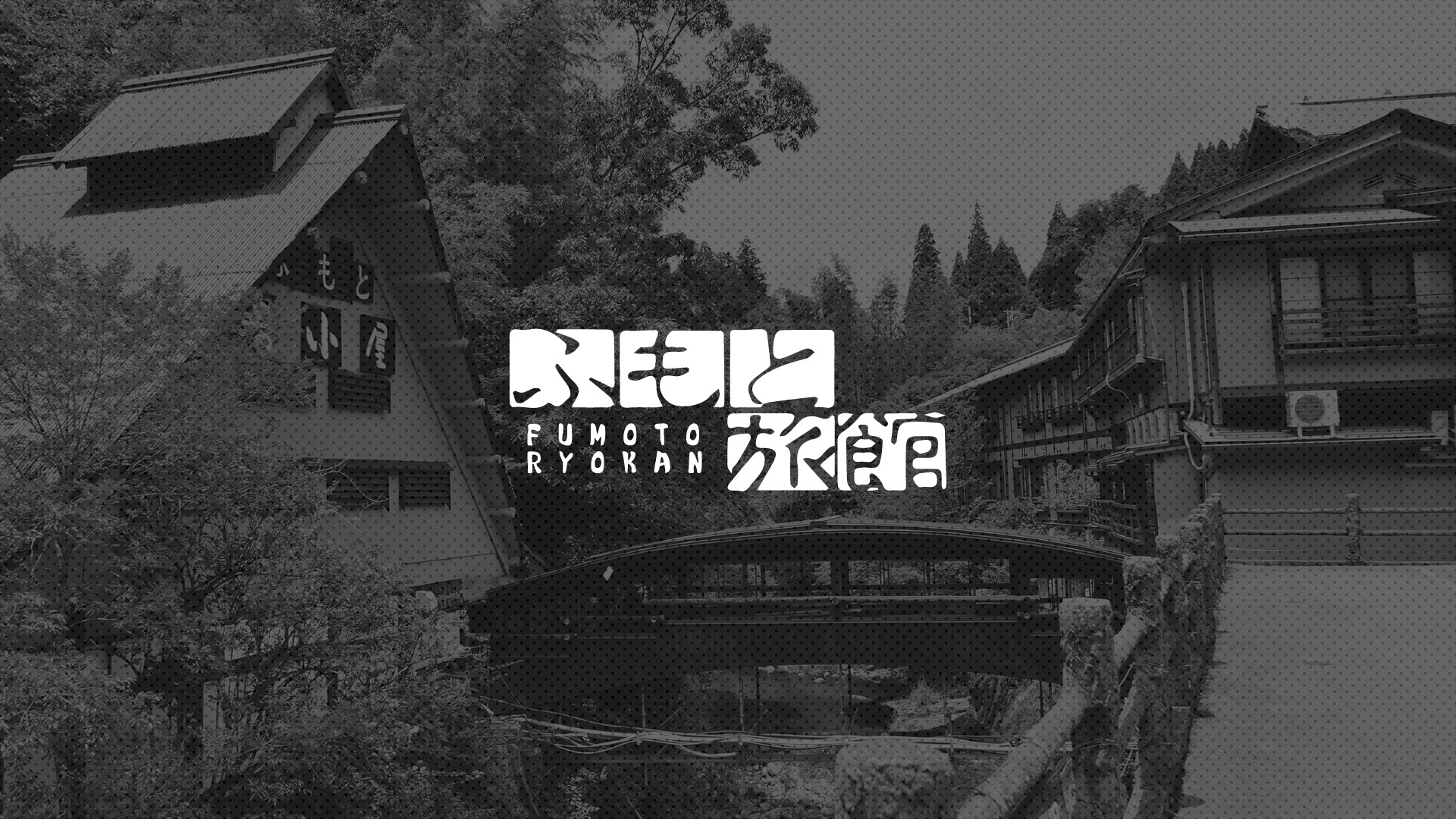
■ Prologue ■
Kurokawa Onsen is said to have opened during the mid-Edo period, but until the mid-1980s it remained a little-known hot spring destination. Nestled in the foothills of the Kuju Mountains and the outer rim of Mt. Aso, it was a quiet therapeutic hot spring town much like many others found throughout Japan.
At the time, nearby Yufuin Onsen, located about 90 minutes away by car, was gaining national attention through a unique vision that distinguished it from Beppu. As Yufuin transformed into one of Japan’s most admired hot spring resorts, Kurokawa watched from the sidelines.
Everything changed in 1986 with the introduction of the “Nyuto Tegata” (Hot Spring Hopping Pass), a system that allowed visitors to enjoy open-air baths at three different ryokans within Kurokawa Onsen. The idea dramatically increased the town’s popularity and helped establish Kurokawa as one of Japan’s most celebrated hot spring destinations.
The driving force behind this innovation was Ikuhiro Matsuzaki, who had recently become president of Fumoto Ryokan at the age of 32. He believed that famous hot spring resorts all possessed a defining symbol—Noboribetsu has Jigokudani (Hell Valley), Kusatsu has Yubatake (Hot Water Field), and Yufuin has Mt. Yufu. Kurokawa, however, had no such landmark. To attract visitors, creativity and collaboration would be essential.
Inspired by hot spring towns in Nagano Prefecture known for their bath-hopping culture, Matsuzaki envisioned a system that would encourage guests to visit the open-air baths of multiple inns. The concept was further developed with the support of his wife, Kumiko Matsuzaki, who is said to have drawn inspiration from a “pass” system she encountered while visiting hot spring resorts throughout Japan during her university years.
Kurokawa Onsen’s compact layout also played a key role in its success. The ryokans are clustered closely together, allowing visitors to explore the town entirely on foot. Rather than being a disadvantage, this unique setting became one of Kurokawa’s greatest strengths. Guests strolling between inns in yukata and wooden geta sandals created a charming atmosphere that enhanced the traditional hot spring experience and helped define the character of Kurokawa Onsen that visitors enjoy today.
02.Originality
■ Originality ■
In Kurokawa Onsen, the walls of the inns are painted in earthy colors, the guardrails are black, and only wooden signboards are permitted, creating a harmonious and unified townscape. Trees and native vegetation are planted throughout the town, allowing visitors to experience a traditional rural landscape rarely seen in modern cities.
The person who emphasized the importance of preserving these landscapes and helped shape the development of Kurokawa Onsen was Tetsuya Goto (born 1931) of Shinmeikan, a member of the generation preceding Fumoto Ryokan president Ikuhiro Matsuzaki (born 1953). Goto’s expertise in landscaping and his innovative approach to creating open-air baths became a model for many younger ryokan owners.
Many ryokan owners looked up to Tetsuya Goto and sought to learn from him. As a result, not only in Kurokawa Onsen but also in the surrounding area, numerous open-air baths inspired by those at Shinmeikan were created. The combination of natural woodland vegetation and spacious open-air baths became a common sight throughout the region.
Fumoto Ryokan, however, chose to pursue a different path. Its focus was on “Private Baths”. In Kumamoto Prefecture, private family baths have long been a part of local hot spring culture, and it has always been common for residents to enjoy hot springs in private rather than in shared bathing facilities. Building on this tradition, Fumoto Ryokan developed a variety of unique private baths, including open-air baths and standing baths. Today, the ryokan offers an impressive selection of 9 different private baths, each with its own distinctive character.
Another remarkable feature of Fumoto Ryokan is the large number of baths supplied by its abundant private hot spring source. In addition to 3 bathing areas for men and women, the ryokan offers a variety of private baths, bringing the total number of baths to 13. For a ryokan with only 14 guest rooms, this is truly exceptional. Even more impressive, all baths are continuously supplied with free-flowing hot spring water directly from the source. The opportunity to enjoy a bath-hopping experience within a single ryokan is one of the unique features that sets Fumoto Ryokan apart.
While oversized open-air baths may create a striking impression, they also require enormous amounts of hot spring water. Some inns are said to add water to their baths when their natural hot spring supply becomes insufficient.
Fumoto Ryokan, by contrast, remains committed to using 100% natural hot spring water directly from the source. Rather than focusing on quantity, the ryokan places greater emphasis on the quality of the hot spring experience.
This commitment reflects the ryokan’s distinctive approach. Although Fumoto Ryokan is part of the renowned Kurokawa Onsen community, it has established its own identity through its dedication to authentic hot spring bathing rather than relying solely on the reputation of the area.
03.The Proprietress’s Sensibility
■ The Proprietress’s Sensibility ■
When people think of the okami—the female proprietor of a traditional Japanese ryokan—what kind of image comes to mind?
Some may picture someone who quietly supports her husband behind the scenes, while others may imagine a leader who stands at the forefront of guest service and hospitality. There are many different styles of okami, but Kumiko Matsuzaki, the okami of Fumoto Ryokan, is particularly well known in Kurokawa Onsen for her extensive knowledge, insight, and eloquence.
Above all, she is known for her remarkable creativity and ability to develop new ideas. In addition to the “Nyuto Tegata” (Hot Spring Hopping Pass), she has contributed numerous initiatives that have helped promote Kurokawa Onsen and enhance its appeal to visitors. One notable example is the “Kurokawa Onsen Mist”, a skincare mist made with hot spring water, which has become a popular local product and was originally her idea.
The okami’s refined sense of taste and creativity can also be seen beyond the ryokan itself.
In the past, rural hot spring towns typically had shops selling traditional steamed buns and local sweets, but rarely a pâtisserie. Seeing an opportunity to offer something different, she helped bring “Patisserie Roku” to Kurokawa Onsen, a charming pastry shop located on the corner of Igosaka, directly across from Fumoto Ryokan.
The sweet aroma drifting from the shop often greets visitors before they even step inside. The display cases are filled with a variety of pastries and desserts made using carefully selected ingredients from the Aso region, including Jersey milk and locally produced eggs known as “Soyo-no-Tsuki”.
Captivated by the quality of these sweets, the okami helped establish the Kurokawa branch of the original pâtisserie located in Aso Uchinomaki. A few seats are available inside the shop, allowing guests to enjoy their purchases on the spot. Among the most popular take-home treats are the roll cakes, available in a variety of flavors such as plain, cacao, matcha, and kinako (roasted soybean flour). Another customer favorite is the boxed half-baked cheesecake, which is easy to share and makes an excellent gift.
Its prime location in the heart of the hot spring town certainly contributes to its popularity, but seeing customers lined up outside the shop has become an everyday sight. Many of them are women dressed in yukata, chatting and smiling as they wait. Scenes like these reflect the lively atmosphere and unique charm that make Kurokawa Onsen such an enjoyable place to visit.
Unlike some of the large outside-owned shops that line the main streets of Yufuin, Patisserie Roku fits seamlessly into the landscape of Kurokawa Onsen. Its harmony with the town may well stem from its strong local roots. In any case, there is no doubt that Kumiko Matsuzaki’s creative vision and producing talent have become an important part of what makes Kurokawa Onsen so appealing.
04.Omotenashi
■ Omotenashi ■
Before 1985, Kurokawa Onsen endured many difficult years. Many ryokans struggled under heavy debt, and running an inn alone was often not enough to make a living. As a result, many owners took on additional jobs outside their inns to support their families, leading a lifestyle that required balancing the ryokan business with other sources of income.
Because the people of Kurokawa Onsen remember those difficult years, the town has remained remarkably humble despite its success and popularity today. Fumoto Ryokan, in particular, embodies this spirit. The ryokan was founded by Kazutaka Matsuzaki, who acquired a struggling inn in 1955 and transformed it into what would become Fumoto Ryokan. In 1961, he helped establish the local ryokan association and became one of the leading figures in Kurokawa Onsen during its formative years. Sadly, Kazutaka Matsuzaki passed away in 1985, just before Kurokawa Onsen entered the period of popularity and recognition for which it is known today.
Taking over from the previous generation, current president Ikuhiro Matsuzaki conceived and implemented many innovative ideas that his predecessor never had the opportunity to realize. Meanwhile, his wife, Kumiko Matsuzaki, drew on her love of travel to develop a guest-focused approach to hospitality, constantly seeking new ways to enhance the guest experience and improve customer satisfaction.
Watching their parents’ dedication and hard work, their children grew up with a deep connection to the family business. Today, all four of their children—two daughters and two sons—are involved in the ryokan industry. Their eldest daughter, Yuko Matsuzaki, serves as the young proprietress of the sister property, Kounoyu Ryokan, which opened in 2002. She is also an active member of the local young entrepreneurs’ association and is deeply committed to the future of Kurokawa Onsen. Her passion for the hot spring town and its continued development is evident in everything she does.
One of Fumoto Ryokan’s greatest strengths is its close-knit organization, with members of the Matsuzaki family taking the lead and a dedicated team of staff working alongside them. Together, they share a strong commitment to hospitality, striving to pay close attention to every guest and provide the best service possible. The staff’s passion and dedication can be felt throughout the ryokan.
This spirit forms the foundation of the hospitality at Fumoto Ryokan. While the service may not be formal or overly polished, it is genuine, warm, and welcoming. It is one of the reasons why so many guests choose to return time and time again. The ryokan offers the simple comforts that allow guests to truly relax and feel at home, and that sense of ease has become an integral part of its character.
Text by Jinichi Ohtake, President & CEO, Onsen.com Inc., Ltd.
Featured on “Kashikiri Onsen Dot Com”!
The review was written by a member of the site's editorial team,
who personally stayed at Fumoto Ryokan and conducted on-site research to provide a detailed report of the experience.
We hope this independent review will be helpful for guests planning their first stay at Fumoto Ryokan.
We invite you to take a look and learn more about what makes this ryokan so special.

 Reservations